Why Essential Oils Work Best When They Fit Real Life
Essential oils are easy to buy and easy to forget. That is where many routines break down.
At The Herb Works Inc., that pattern shows up with natural wellness products in general. Most people do not need more options. They need a clearer place for the product in the day, or it stays on a shelf instead of becoming part of life.
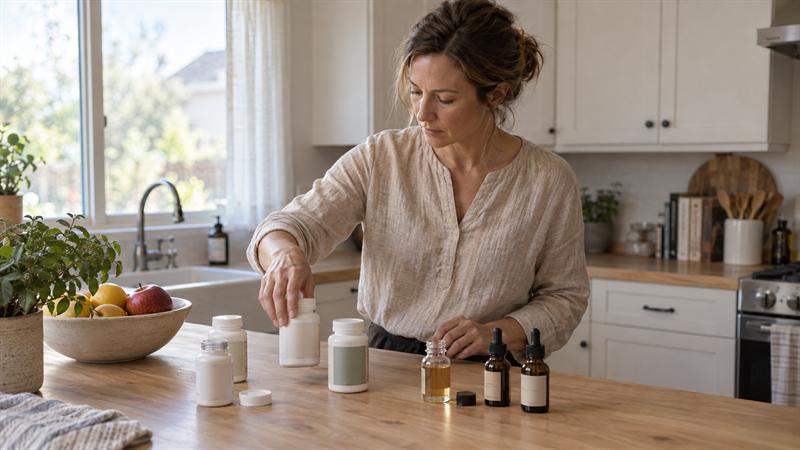
A strong essential oil routine starts with placement, not with collecting more bottles. If an oil fits a real moment in the day, it is more likely to get used. If it does not, the routine often fades quickly.
If essential oils are still new, start with the basics in Essential Oils for Beginners: What to Know Before You Start. If the basics already make sense, the next step is turning that knowledge into a routine you can actually keep.
Start With Your Day, Not With a Long Product List
The easiest way to build an essential oil routine is to start with a moment that already happens every day. That gives the oil a job and gives the habit a place to stick.
A common mistake is starting with too many oils and no clear use plan. That often leads to confusion, inconsistent use, and a routine that never settles in. A better approach is to start with one goal, such as focus, calm, or a more comfortable home environment, and connect it to one part of the day.
- Waking up
- Starting work or school
- Taking an afternoon break
- Tidying the home
- Getting ready for bed
From there, choose one oil or blend and one method of use. That usually works better than trying to build a full morning-to-night system all at once.
Choose One Morning Use
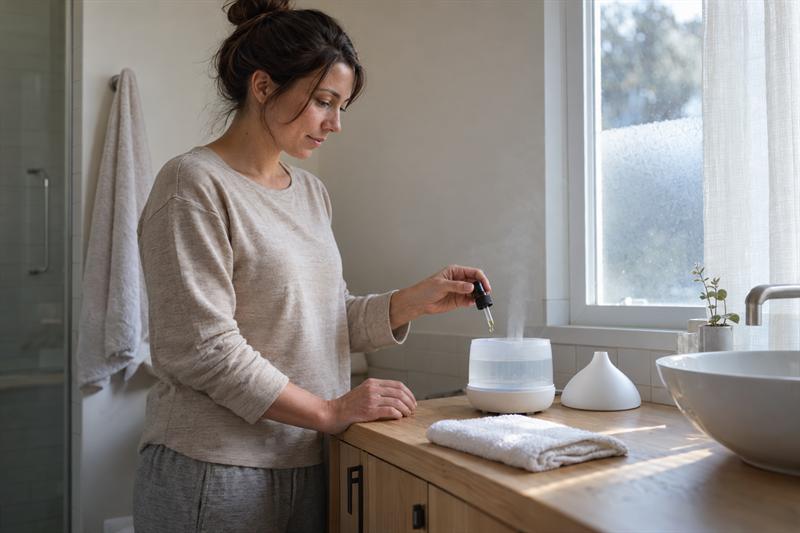
Morning routines can work well when the goal is to create a cleaner start to the day. A diffuser while getting ready or a diluted roll-on used at the same time each morning gives the oil a clear role.
This is where many people get stuck. They want more energy or focus, but they never tie the oil to a regular cue. If it is not part of brushing teeth, making breakfast, or getting dressed, it often gets skipped.
Choose One Midday or On-the-Go Use
Midday use is often about transitions. This is the point in the day when stress, mental clutter, or loss of momentum can start to build.
A personal inhaler, a small workspace diffuser, or a diluted topical blend used during a break can make that reset more intentional. What matters most here is convenience. If the setup takes too much effort, the habit often drops off quickly.
Choose One Evening Use
Evening routines are often the easiest place to be consistent because the day is already slowing down. Diffusing calming oils, using a diluted topical blend before bed, or adding oils to a simple wind-down habit usually fits more naturally here.
Evening routines also tend to hold better because they already come with built-in cues, which makes follow-through easier.
Three Easy Ways to Use Essential Oils Daily
Most essential oil routines fall into three categories: aromatic use, topical use, and household use. These are among the most practical ways to use oils daily because they fit how people already move through a day.
The best option is usually the one that fits your lifestyle with the least friction. If a method feels complicated, it rarely becomes routine.
Aromatic Use for Atmosphere and Transitions
Aromatic use is often the easiest place to start. Diffusers and personal inhalation can work well when the goal is to create a clear shift between parts of the day.
This can fit naturally into getting ready in the morning, settling into a workspace, reading in the evening, or resetting a room after a long day. The value here is not complexity. It is the way scent can mark the shift from one part of the day to the next.
Topical Use With Basic Safety in Mind
Topical use can work well when someone wants the routine attached to a physical action. That might be applying a diluted blend after a shower, before bed, or during a midday break.
Safety matters here because daily use needs to stay simple and sustainable. Dilution matters. Carrier oils matter. Patch testing can help when trying a new product. Product directions also matter, especially when the goal is regular use rather than occasional use.
- Use a carrier oil when topical dilution is appropriate
- Try a patch test when using a product for the first time
- Follow the product label and directions closely
- Keep the routine simple enough to repeat comfortably
What usually goes wrong is rushing past the basics. Once a routine feels irritating, confusing, or inconsistent, people tend to stop using it altogether.
Household Use for Everyday Spaces
Some of the most sustainable essential oil habits happen in the home, not just on the body. Oils can become part of a room-refreshing routine, an evening reset, or a simple ritual that helps shared spaces feel more settled and inviting.
This can work especially well for people who want essential oils to support the home environment instead of becoming another personal care step to remember. When oils are tied to cleaning up, settling in, or closing out the day, they are often easier to keep using.
A Simple Morning, Midday, and Evening Essential Oil Routine
A realistic routine should feel easy enough to repeat, not impressive on paper. The goal is not to use oils at every possible moment. The goal is to place them where they naturally support the day.
A common mistake is trying to build a complete system too fast. That often results in too many steps, too many products, and less consistency. A better routine keeps each part light and repeatable.
Morning Ideas for Focus and Fresh Energy
Morning is a good time for oils that help the day feel more intentional. That might mean diffusing an uplifting scent while getting ready or using a simple diluted blend as part of the same sequence each day.
One cue, one oil, one method is usually enough. If the routine gets more complicated than that, it starts to compete with the rest of the morning instead of supporting it.
Midday Ideas for Reset and Balance
Midday routines can work best when they interrupt drift. A desk diffuser, a brief aromatic pause, or a simple reset ritual during a break can help create a cleaner transition.
This is where many routines either become useful or disappear. If midday support is too hard to access, it may not get used when it is most needed.
Evening Ideas for Slowing Down
Evening routines usually have the strongest staying power because they connect to habits people already protect. Diffusing oils during cleanup, reading, or bedtime prep can help make the whole environment feel more settled.
This matters because routines usually last when they support a real transition. Evening is one of the clearest daily transitions, which is why this is often the easiest place to begin.
If your routine keeps falling apart, it usually means the oils are not attached to a strong enough daily cue.
- You use oils only when you remember them
- You have several oils but no clear reason for each one
- Your routine changes every day, so nothing sticks
- You want natural support, but the setup feels like extra work
When these signs show up, a simpler routine is usually the better next step.
How to Choose Oils Based on the Moment You’re Trying to Support
Most people do not need more oils. They need a clearer way to choose them.
The most practical method is to choose by moment and purpose. That keeps the routine grounded in real use instead of guesswork.
For Calm
Calm-focused oils usually fit best in the evening, during stressful transitions, or in moments when the home feels overstimulating. The goal here is not to do more. It is to create a cue that helps the environment and the routine feel steadier.
What gets misunderstood is that calm support often works best when it is predictable. Random use tends to feel inconsistent, while routine use creates a stronger pattern.
For Clarity
Clarity-focused choices often make the most sense in the morning or midday. These are the points in the day when people are trying to start cleanly, refocus, or avoid the mental drop that builds after several hours of activity.
The decision here is mostly about timing. If focus tends to slip at the same point every day, that is usually the best place to put the oil.
For Comfort During Seasonal Shifts
Routine needs change with the season, but the framework does not need to change. The same morning, midday, or evening structure can stay in place while the oils used inside that structure shift over time.
That is one reason seasonal routines can work better than starting from scratch every few months. For more ideas, see Winter Oil Tips for Comfort and Skin Relief and Natural Ways to Ease Spring Allergies with Oils.
For a More Pleasant Home Environment
Some readers are not looking for a personal care routine at all. They want the home to feel fresher, calmer, or more settled.
That is a valid daily use case, and it is often one of the easiest to maintain. When oils become part of tidying up, welcoming people into a shared space, or closing down the day, they stop feeling like an extra task and start feeling like part of how the home functions.
Common Mistakes That Make an Essential Oil Routine Hard to Keep
- Starting with too many oils: this creates decision fatigue and usually results in very little consistent use.
- Using oils without a routine cue: if the oil is not connected to something that already happens, it gets forgotten.
- Expecting oils to do everything: this leads to frustration and can reduce the value of the routine.
- Skipping basic safety steps: once use feels irritating or unclear, the routine usually stops completely.
This is where many people lose momentum. The routine becomes harder than it needs to be, and once it feels like work, it rarely lasts.
The more practical path is almost always the simpler one. This is the same pattern discussed in How to Build a Simple Daily Routine with Herbal Supplements. When the routine is built around repeatable habits instead of too many moving parts, consistency often improves.
When a Personalized Wellness Plan Can Help
Sometimes a simple essential oil routine is enough. Other times, the oil routine keeps pointing to a bigger issue, such as low energy, poor sleep rhythms, seasonal discomfort, or a wellness plan that feels scattered.
At The Herb Works Inc., essential oils are one part of a broader natural wellness approach. For some people, the next useful step is connecting oils with herbal remedies, nutritional supplements, nutrition consultations, or a more personalized wellness plan so the daily routine works together instead of pulling in different directions.
This matters because wellness routines usually break down when each tool is used separately with no clear structure. Once the plan becomes more connected, the routine often becomes easier to maintain.
Key Takeaways
- Start with one part of the day, not a long list of products.
- Choose one goal and one method of use.
- Attach the oil to a routine that already exists.
- Keep the structure steady even when seasonal needs change.
- When the routine feels scattered, a broader wellness plan may help.
Conclusion
The real problem is not a lack of essential oil options. The real problem is that most people never give those oils a clear place in the day, so the routine stays inconsistent and eventually disappears.
If that pattern is not addressed, the same thing usually keeps happening. More products come in, the routine gets more complicated, and the oils still do not become part of daily life. The better next step is to build a routine around how the day already works and, when needed, connect that routine to a broader wellness plan.
The Herb Works Inc. is a practical next step for people who want that kind of structure. Whether the goal is to simplify essential oils, connect them with herbal remedies or supplements, or build a more complete wellness rhythm, the focus is on creating a routine that fits real life and can keep working over time. For readers who want a stronger foundation before expanding their plan, Essential Oils for Beginners: What to Know Before You Start is a useful place to continue.
Company Approach
At The Herb Works Inc., the approach is to simplify wellness so it becomes usable. That means looking at what part of the day keeps breaking down, what support belongs there, and how to make the routine sustainable instead of overloaded.
This is why essential oils are treated as one tool within a broader system, not as a stand-alone fix. When needed, that system can also include nutritional supplements, herbal remedies, nutrition consultations, and personalized wellness plans that help the routine work together in a more practical way.
FAQ
Can essential oils be used every day?
Yes, many people use essential oils every day, but daily use works best when it stays simple and intentional. In practice, that usually means using one or two oils in consistent ways instead of constantly switching products or methods. For example, someone might diffuse an oil blend each morning while getting ready and use a different one during an evening wind-down. The key point is that daily use works best when it is tied to a stable routine, not when it is used randomly.
What is the best way to start an essential oil routine if you’re a beginner?
The best way to start is with one part of the day that already happens without effort, such as waking up or getting ready for bed. Then choose one purpose, like feeling more focused in the morning or creating a calmer evening environment, and match it with one oil and one method. What usually gets misunderstood is that beginners do not need a large collection. They need one clear use case they will actually repeat.
Should essential oils be used in the morning or at night?
They can work in either part of the day, but the right choice depends on what the routine is meant to support. Morning use usually fits best when the goal is freshness, clarity, or a more intentional start. Night use often works better for consistency because bedtime routines already include predictable cues. In other words, timing should follow the purpose of the routine, not a fixed rule.
How many essential oils do you need for a simple daily routine?
A simple routine usually starts well with one or two oils. That is enough to support common daily needs without creating too many decisions. For example, one oil might fit a morning reset while another supports an evening wind-down. What matters most is not variety. It is whether the oils match real habits and get used consistently.
What’s the difference between diffusing essential oils and applying them topically?
Diffusing is an aromatic method, so it usually works best when the goal is to shape the feel of a room or create a cue during transitions, such as starting work or settling down at night. Topical use is more connected to a physical action, which often makes it easier to remember as part of a routine. A useful distinction is that diffusing tends to support atmosphere, while topical use tends to support habit consistency through touch and sequence.
How do essential oils fit into a broader natural wellness routine?
Essential oils often work best as one part of a broader routine rather than as the whole plan. Someone might use oils to support a morning or evening habit while also paying attention to nutrition, hydration, herbal support, or other wellness goals. That often leads to a more stable routine because each piece has a clear role. The important distinction is that oils are most useful when they support a larger rhythm of daily care instead of being expected to carry the whole routine alone.