Quick Answer: Herbal remedies and supplements are often treated as the same thing, which can lead people to choose products based on labels and trends instead of what is actually in the product. Herbal remedies focus on plant-based ingredients, while supplements are a broader category that includes herbs, vitamins, minerals, probiotics, amino acids, and other dietary ingredients.
A botanical tea, an herbal capsule, and a daily multivitamin can all fit into a wellness routine, but they are not interchangeable. Using several products with overlapping ingredients without comparing their labels can make a routine harder to understand and maintain.
Herbal Remedies vs Supplements at a Glance
Herbal remedies are plant-based products or practices, while supplements are packaged products intended to add dietary ingredients to a routine. An herbal supplement fits both categories because it contains a botanical ingredient in a supplement format, such as a capsule, powder, or tincture.
- Herbal remedies: Focus on botanicals, meaning ingredients derived from plants.
- Dietary supplements: Can contain herbs, vitamins, minerals, probiotics, amino acids, protein, fatty acids, or blends of several ingredients.
- Herbal supplements: Are dietary supplements made with herbal or botanical ingredients.
- What changes the decision: The ingredient list, serving size, product form, directions, and your existing routine matter more than broad marketing terms.
Start with the question you are trying to solve. If the goal is to add a specific nutrient, a nutritional supplement may be the clearer category. If the goal is to use a particular botanical in a format that fits daily habits, an herbal product may be the better place to start. Some routines include both, but adding products without checking for overlap can create confusion instead of clarity.
What Is an Herbal Remedy?
An herbal remedy uses botanicals, which are ingredients derived from plants. These products may contain one herb or a combination of plant-based ingredients and can appear as food, tea, tincture, powder, capsule, or topical preparation.
The word “herbal” identifies the ingredient source. It does not tell you how concentrated the product is, how it should be used, or whether it fits with the rest of your routine. Plant-based products can vary widely in preparation, serving size, and directions.
Herbal Remedies Begin With Botanicals
Botanicals can come from many parts of a plant, including leaves, roots, flowers, seeds, bark, and berries. A whole herb, dried powder, liquid extract, and blended formula can all contain plant ingredients, but they are different preparations with different labels and serving directions.
Plant-based does not mean risk-free. The herb, amount used, product form, other ingredients, medications, and individual health circumstances can all affect whether a product fits a routine. Treating “natural” as a safety guarantee can cause important details to be overlooked.
Common Herbal Forms: Tea, Tincture, Capsule, Powder, and Topical Products
- Tea: Plant material is steeped in water. Preparation and serving details differ from a capsule or extract.
- Tincture: A liquid botanical preparation with directions commonly based on drops or milliliters.
- Capsule: A format that may contain dried herb, powdered plant material, or an extract. A capsule containing an herb is both an herbal remedy and a dietary supplement.
- Powder: A botanical ingredient mixed into food or beverages. The serving size deserves careful review.
- Topical products: Plant-based preparations intended for use on the skin. They differ from ingestible products and should be used according to their labels.
Some people also explore essential oils as part of a plant-based wellness routine. Essential oils have different use and safety considerations from teas, capsules, and other ingestible herbal products, so they should not be treated as substitutes for one another.
Traditional Use and Research Are Not the Same Thing
Many herbs have a long history of traditional use. That history can be meaningful, but it is different from knowing how a specific modern product will fit an individual routine.
Research also varies by botanical, preparation, serving amount, and intended use. Tradition, marketing claims, and research are different sources of information. Reading the label and understanding the actual product should come before assuming a familiar herb will meet a specific need.
What Is a Dietary Supplement?
A dietary supplement is a product intended to add dietary ingredients to a person’s routine. Supplements are broader than herbal remedies because they can include nutrients and compounds that do not come from herbs.
These products commonly include a Supplement Facts panel and may contain one ingredient or many. The label is where a useful comparison begins because a product name alone does not show the serving size, active ingredients, or whether it duplicates something already being used.
Supplements Can Contain Herbs, but They Can Also Contain Nutrients
Herbal supplements sit in the overlap between both categories. A capsule with one botanical ingredient is an herbal remedy in supplement form, while a mineral supplement or probiotic is not herbal simply because it supports a wellness routine.
Single-ingredient products are generally easier to compare because the main ingredient is clear. Blended formulas need closer attention because they can contain several nutrients, herbs, or other ingredients that overlap with products already in use.
Common Supplement Categories
- Vitamins and minerals: Products designed around nutrients such as vitamins, magnesium, calcium, or other minerals.
- Herbal and botanical formulas: Supplements containing one or more plant-derived ingredients.
- Probiotics and digestive-support products: Products that may include probiotic strains or other dietary ingredients.
- Protein, amino acids, and fatty acids: Products intended to add specific dietary components to a routine.
- Combination formulas: Products that combine herbs, vitamins, minerals, or other ingredients in one serving.
The category alone does not tell you whether a product belongs in your routine. A supplement is not automatically useful because it contains a familiar nutrient, and an herbal formula is not automatically a better choice because it is plant-based. The label, the purpose, and the rest of the routine help determine whether the product makes sense.
Why Form and Dose Matter
A capsule, powder, gummy, liquid, or tablet is a delivery format, not a quality rating. The same ingredient can appear in different forms with different serving sizes, added ingredients, and directions.
Concentrated extracts and multi-ingredient formulas need closer review because it is easier to overlook what is actually being added. More ingredients and a larger number on the front label do not automatically create a better routine. They usually mean there are more details to review.
Where Herbal Remedies and Supplements Overlap
Herbal supplements make the difference between herbal remedies and supplements easier to understand. The botanical is the herbal ingredient, while the capsule, tablet, powder, or liquid format places that product within the broader supplement category.
Consider one botanical used in several ways:
- A culinary herb used in meals is a food ingredient.
- A tea made from that herb is an herbal preparation.
- A tincture uses a prepared liquid form of the botanical.
- A capsule containing the herb is generally an herbal supplement.
- A blend containing that herb plus vitamins or minerals is a combination supplement.
The plant may be the same, but the preparation, concentration, serving size, and added ingredients can differ. A capsule is not proof of strength, quality, or suitability. It is a format that needs a clear label review.
How to Decide Which Option Fits Your Goal
The most practical approach is to start with your goal and current routine, not a product trend. This helps avoid buying several products, taking them inconsistently, and then losing track of what is being used or duplicated.
- Identify the purpose: Decide whether you are looking at a general nutritional gap, a botanical product, or a broader wellness routine.
- Review what you already take: Check multivitamins, powders, teas, capsules, and blended products before adding anything new.
- Compare the label: Look at active ingredients, serving size, directions, and other ingredients instead of relying on the product name.
- Choose a format you can use consistently: A product is more likely to fit a routine when its format, directions, and timing work with daily life.
- Address safety questions first: Medication use, ongoing health conditions, pregnancy, breastfeeding, surgery, and unexplained symptoms change the decision.
If you are trying to organize several products at once, building a supplement routine by goal can provide a clearer starting point. A focused routine is generally easier to review than a collection of products added for unrelated reasons.
Start With the Purpose, Not the Product Trend
Popular products can create the impression that every routine needs the same ingredients. Useful routines start by identifying what you want to support, then looking at whether a nutrient-focused product, botanical product, or food-based change matches that purpose.
Choosing a product because it is popular can lead to adding another product when the first one never fit into a clear daily plan. This can result in inconsistent use, ingredient overlap, and less confidence about what belongs in the routine.
Consider Whether the Goal Is Nutrient-Focused, Botanical, or Both
A nutrient-focused question usually starts with dietary intake and whether a vitamin, mineral, protein, probiotic, or other dietary ingredient belongs in a routine. A botanical-focused question starts with a specific plant ingredient and the format that makes sense for the person’s preferences and daily habits.
Some routines include both nutrients and botanicals. That does not mean every wellness goal requires both categories. The right starting point is the one that directly matches the purpose instead of adding products simply to cover every category.
Check for Duplicate Ingredients Before Adding Another Product
Duplicate ingredients are where a simple routine can become complicated. A multivitamin, a targeted mineral formula, and a combination supplement can repeat the same nutrient. A botanical blend can also repeat herbs already used in tea, tincture, or capsule form.
Before adding another product, compare active ingredients and serving sizes across everything you currently use. Each item may look reasonable on its own, but the combined routine should also be considered as a whole.
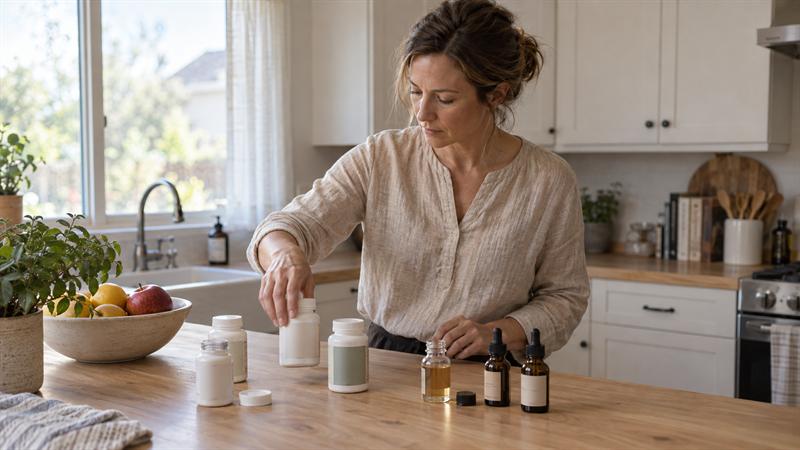
If several products are already in the cabinet, pause before making another purchase and review the full routine.
- You use a multivitamin plus one or more targeted nutrient formulas.
- You take a blended herbal supplement while also using individual herbs in tea, capsule, or liquid form.
- You cannot quickly explain what each product contributes to your routine.
- You have stopped and restarted products because the schedule feels too complicated to maintain.
These signs may mean the routine would benefit from being simplified and organized before anything else is added. A clear plan can reduce duplicate ingredients and make it easier to understand what you are taking.
How to Read Labels Before Choosing an Herbal Product or Supplement
Front-label language is designed to get attention. Product details are what help you compare products responsibly. Words such as “natural,” “clean,” “advanced,” or “wellness” should not be the only deciding factor.
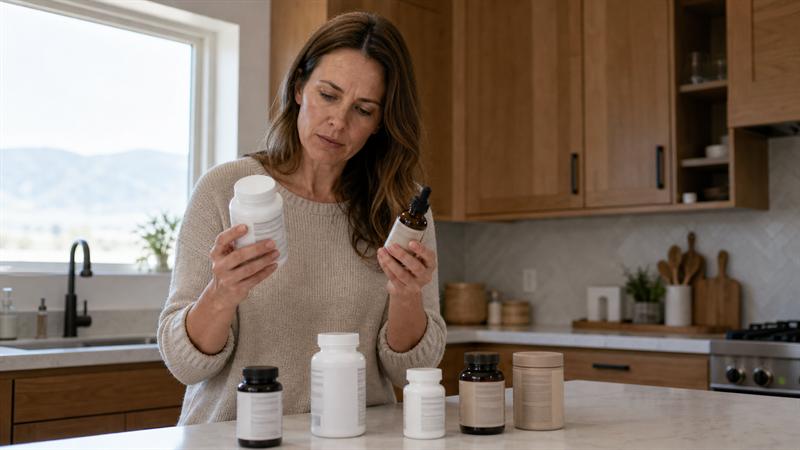
Comparing products by bottle size or product name alone can lead to poor comparisons because the most useful information is usually in the Supplement Facts panel and ingredient list.
Supplement Facts, Serving Size, and Active Ingredients
- Supplement Facts: Review the listed dietary ingredients and the amount included per serving.
- Serving size: Check whether the listed amount applies to one capsule, two capsules, one scoop, or another serving amount.
- Active ingredients: Identify what the product is intended to provide.
- Directions: Review how frequently the product is intended to be used.
Two products can look similar but provide very different amounts per serving. Comparing labels on a like-for-like basis helps prevent the assumption that a larger bottle or stronger-sounding name means more of the ingredient you are seeking.
Extracts, Standardization, and Product Details
An extract is a prepared form of a botanical ingredient. Some products use standardization language to identify a specified amount of a constituent within the botanical.
That detail can describe the product, but it does not decide whether the product fits your routine. The complete label still matters, including serving size, other ingredients, directions, and whether the same botanical is already being used elsewhere.
Other Ingredients, Allergens, and Proprietary Blends
Other ingredients can include capsule materials, flavoring, sweeteners, binders, or other product components. Allergen information also matters for people with known sensitivities.
Proprietary blends need extra attention because they can list several ingredients without clearly showing the amount of each one. This makes side-by-side comparison harder and can make duplicate ingredients easier to miss. For a more detailed framework, see understanding supplement labels and what ingredients really mean.
Safety Considerations: “Natural” Does Not Mean Risk-Free
Herbs and supplements can create concerns when they are combined without reviewing the full routine. Medication interactions, duplicate ingredients, allergies, health conditions, and life stage all change what needs to be considered.
Extra care is needed when someone is pregnant, breastfeeding, preparing for surgery, managing an ongoing health condition, using prescription medications, choosing products for a child, or helping an older adult build a routine. New, severe, persistent, or unexplained symptoms warrant medical attention rather than a trial-and-error supplement approach.
- If you take prescription medication: Review potential ingredient interactions with a pharmacist or qualified healthcare professional before adding herbs or supplements.
- If you use several formulas: Check for repeated nutrients and botanicals across every label.
- If a product causes an unexpected reaction: Stop using it and seek appropriate care if symptoms are severe or concerning.
- If symptoms are severe or ongoing: Prioritize medical evaluation rather than adding more products.
Review products as a complete system rather than treating every bottle as separate. This can make duplicate ingredients, conflicting directions, and unnecessary complexity easier to spot.
When a Nutrition Consultation Can Help
A nutrition consultation can be useful when the issue is not simply choosing one product. It can be especially helpful when a routine includes multiple supplements, herbal formulas, dietary goals, changing habits, or uncertainty about what should stay and what should be removed.
The Herb Works Inc. can help you walk through current products, ingredient overlap, food habits, daily schedule, and the goal behind each product. Looking at these details together can be more useful than choosing items one at a time when the main concern is how products stack together.
For people in Mapleton and Lindon, The Herb Works Inc. offers a free first consultation to help organize nutritional supplements, herbal remedies, and wellness routines into a more manageable plan. For medication questions, symptoms, or medical treatment decisions, consult the appropriate healthcare professional.
Key Takeaways
- Herbal remedies focus on botanicals and plant-derived ingredients.
- Supplements are a broader product category that includes herbs, vitamins, minerals, probiotics, amino acids, and other dietary ingredients.
- Herbal supplements fit both categories because they contain botanicals in a supplement format.
- Product format does not determine whether something is stronger, safer, or better suited to a routine.
- Serving size, active ingredients, other ingredients, and duplicate products matter more than front-label marketing.
- A complicated routine generally benefits from being reviewed and simplified before more products are added.
Frequently Asked Questions
Are herbal remedies considered supplements?
Some herbal remedies are supplements, but not all of them are. A botanical sold in a capsule, tablet, powder, or labeled liquid product may be a dietary supplement. Herbal tea, culinary herbs, and topical botanical products are not necessarily dietary supplements because the format and intended use are different.
The important distinction is that “herbal” describes the plant-based ingredient, while “supplement” describes a broader product category. An herbal capsule is both, but a vitamin or mineral supplement is not automatically herbal.
Are herbal supplements safer than vitamins or minerals?
Neither category is automatically safer. The ingredient, amount per serving, product formulation, current medications, health conditions, and other products in the routine determine the safety questions that need attention.
For example, a mineral formula and a botanical blend can both create concerns when they duplicate ingredients in other products. “Natural” identifies an ingredient source. It does not classify a product as risk-free.
Can someone take herbal remedies and supplements together?
Some people use both, but the complete routine should be reviewed together. A multivitamin, targeted nutrient product, and blended formula can repeat vitamins or minerals. Tea, tincture, capsule, and herbal blends can also repeat the same botanical ingredients.
The deciding factor is not whether the products come from different categories. It is whether the combined labels create unnecessary duplication, conflicting directions, or potential medication concerns.
What should I check before buying an herbal supplement?
Check the active ingredients, amount per serving, serving size, directions, botanical form, other ingredients, allergen information, and whether the formula is a single ingredient or a blend. Then compare those details with everything else already in the routine.
A proprietary blend deserves closer review because it may list multiple ingredients without showing the amount of each one. That makes it harder to compare products and identify overlap.
Is an herbal tea the same as an herbal capsule?
No. Both may contain botanical ingredients, but they are prepared and used differently. Tea is made by steeping plant material in water, while a capsule may contain dried herb, powder, or an extract.
The serving size, concentration, preparation method, added ingredients, and label information can all differ. A capsule is not automatically stronger or better. It is simply a different format that should be evaluated on its own details.
When should I ask for help choosing supplements or herbal products?
Individualized guidance can be useful when several products are being combined, labels show overlapping ingredients, prescription medications are part of the routine, or the daily plan has become difficult to understand and maintain. In these situations, reviewing one product at a time may not be enough.
The goal is to identify what each product contributes, what is repeated, and what no longer fits the routine. That can lead to a more useful decision than continuing to add products without a clear structure.
Conclusion: Choose the Category That Matches the Question You’re Trying to Solve
The real issue with herbal remedies vs supplements is not choosing which category sounds better. The issue is understanding what is in each product, how it fits with the rest of your routine, and where ingredients are repeated. When that is not addressed, routines can become crowded, inconsistent, and harder to evaluate.
The Herb Works Inc. is a practical next step for people who want to sort through herbal remedies, nutritional supplements, and a routine that has become more complicated than it needs to be. Start with the free first consultation to review what you are using, compare labels for possible overlap, and build a clearer routine around your wellness goals.