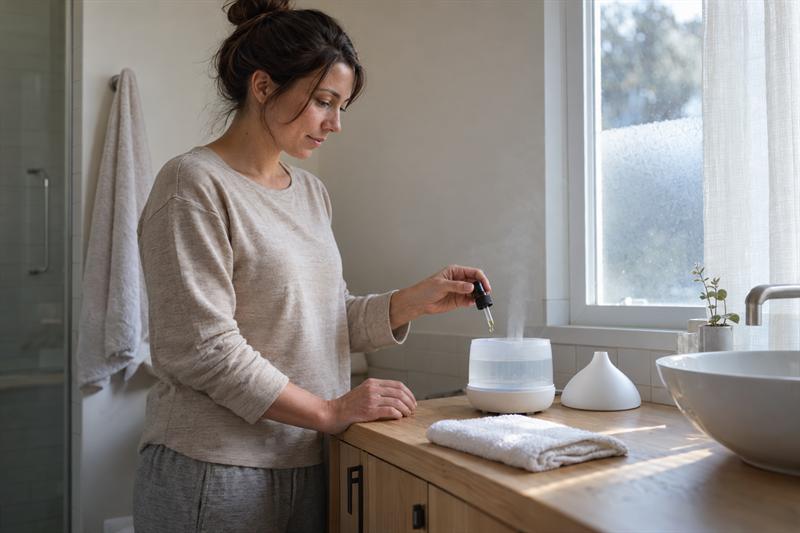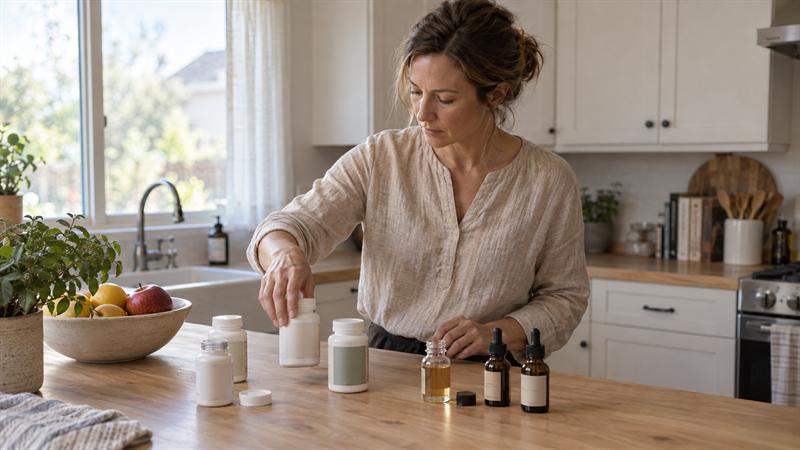
Quick Answer: The biggest mistake is choosing a product style that does not match how you will actually use it. Single oils are usually the better fit when you want flexibility, clear ingredients, and a chance to learn what you like. Blends are usually the better fit when you want a simple, repeatable option that fits easily into daily life.
When people compare essential oil blends and single oils, they are usually trying to avoid wasted money, shelf clutter, and products that sound useful but never become part of a routine. At The Herb Works Inc., this question comes up often because most people do not need more bottles. They need a clearer way to choose.
What’s the Difference Between a Single Essential Oil and a Blend?
A single essential oil comes from one plant source and is sold as one oil identity, such as lavender, lemon, eucalyptus, or peppermint. A blend combines two or more oils into one formula, usually built around a scent profile or a routine goal like calm, focus, or evening use.
This matters because singles and blends solve different problems. Single oils give you more control. Blends remove steps. Confusion usually starts when people compare them as if one should always be better, when the real question is which one fits their routine well enough to be used consistently.
- Single oil: one plant source, more flexibility, easier ingredient clarity
- Blend: multiple oils in one bottle, more convenience, less customization
- Important detail: some blends are undiluted combinations of essential oils, while others are pre-diluted for a specific type of use
What counts as a single essential oil
A single essential oil is one oil from one plant source. Lavender is lavender. Lemon is lemon. Peppermint is peppermint. This makes singles useful for people who want to understand individual scents instead of guessing which part of a blend they actually like.
That clarity can support better buying decisions later. If you know you consistently reach for one scent, it becomes easier to build a routine that stays simple instead of turning into a collection of trial purchases.
What counts as an essential oil blend
An essential oil blend combines multiple oils in one formula. Some are built for a balanced aroma, while others are organized around a use pattern like winding down at night or freshening a room. A blend can be a practical shortcut, but only if the formula is clear and the intended use makes sense.
This is where people often get tripped up. A product name may sound helpful, but the label still needs to show what is actually in the bottle. That is what turns a blend from a vague promise into an informed choice.
Why the difference matters when choosing products
Single oils often work best when control matters most. Blends often work best when simplicity matters most. If that distinction gets ignored, people may buy based on names, trends, or assumptions, and that can lead to products that do not fit real habits.
One common pattern is choosing for the routine you hope to have instead of the routine you already follow. That is where good intentions can turn into unused bottles.
Single Oils: When They Make the Most Sense
Single oils usually make the most sense when you want to learn, customize, or keep ingredients straightforward. They are especially useful for people who want to build familiarity with scents before buying more products.
This is also often the better starting point for people who do not want to feel locked into a pre-made formula. If you want to know exactly what you are using and how it fits into different parts of your day, single oils give that flexibility.
For readers still getting oriented, Essential Oils for Beginners: What to Know Before You Start can help build that foundation.
Best for learning individual scents and preferences
Single oils help you figure out what you actually enjoy. That matters more than many people expect. If a blend smells appealing but you do not know which oils are creating that experience, repeat buying becomes guesswork.
A common pattern is starting with too many mixed products too soon. That can make it harder to tell what you like, what you ignore, and what truly deserves a place in your routine.
Best for building custom diffuser or topical combinations
Single oils are also a practical choice for people who want to combine scents based on the season, time of day, or personal preference. That flexibility is useful when one bottle needs to work in more than one way.
This usually matters most for people who like adjusting their routine instead of repeating the same formula every day. If the goal is to experiment without buying a separate blend for every mood or moment, singles make that possible. For a simple next step, Where Essential Oils Fit in a Daily Routine: A Simple Start shows how oils can fit into a manageable routine.
Best for people who want more control over ingredients
Some people simply want clear ingredient control. Single oils make that easier. You know what is in the bottle without needing to decode a branded formula name or sort through an unclear description.
This can become especially important when someone wants to build slowly. Starting with a few clear options may lead to better long-term choices than jumping into several blends at once.
Essential Oil Blends: When They’re the Better Fit
Blends are usually the better fit when ease and consistency matter more than customization. They remove extra steps, which is often the difference between a product that gets used and one that gets forgotten.
This is not a lesser choice. In real routines, convenience is often what makes a wellness habit sustainable. A blend can be the smarter option when the goal is to make one part of the day feel more settled, simple, and repeatable.
Best for convenience and simple daily use
A blend puts the formula into one bottle and turns several decisions into one. That is useful for busy mornings, quick evening routines, or shared household use where no one wants to stop and mix products each time.
Lower-effort routines often last longer. When people choose products that require too many steps, consistency may drop first. Then the whole routine can start to fade out.
- One bottle is easier to reach for every day
- A ready-made formula reduces decision fatigue
- Simpler use often supports better follow-through
Best for a specific mood or routine goal
Blends can make more sense when someone wants a product tied to a narrow purpose, like an evening wind-down, a fresh home atmosphere, or a calmer moment in the middle of a busy day. In that case, the value is not that a blend sounds impressive. The value is that it removes setup.
Still, this is where problems can start if shoppers stop at the name. A bottle labeled “calm” says very little on its own. The ingredient list is what tells you whether the blend is actually clear, intentional, and worth using. Readers interested in that seasonal angle may also find Choosing Real Oils for Calm During Cold Utah Winters helpful.
Best for people who prefer a ready-made option
Some people do not want to build formulas. They want one product that already feels complete. For beginners especially, that can remove a lot of friction.
This matters because decision fatigue is real. If choosing and combining oils feels like a chore, the product may stop being part of a routine and start becoming another unfinished intention.
How to Choose Between Single Oils and Blends
The fastest way to choose is to stop asking which one is better and start asking which one matches how you will actually use it. Many wrong purchases happen when people buy for possibility instead of practicality.
If you want a direct way to decide, use these five filters:
- Start with your actual goal
- Decide how much flexibility you want
- Consider scent preferences and tolerance for complexity
- Check the ingredient list and quality details
- Match the product to your real routine, not your ideal one
The same decision logic shows up across wellness products. What Makes a Supplement High Quality? A Complete Guide to Sourcing, Testing and Purity explains why transparency matters so much when comparing products.
Start with your goal
If the goal is to learn what you like, start with singles. If the goal is to make one part of the day easier, a blend is usually the better choice. This step sounds simple, but it helps prevent unnecessary buying.
If you are looking at many options and still feel unclear, it usually means the goal has not been narrowed enough. Choosing gets easier once the product has a job.
Think about how much flexibility you want
Single oils give you room to adapt. Blends give you a finished formula. That tradeoff is one of the biggest decision drivers, and it often matters more than price or packaging.
If you like changing scents by season, time of day, or mood, singles usually fit better. If you want one bottle that does the job without extra thought, blends usually make more sense.
Consider scent preferences and tolerance for complexity
Some people enjoy layered aromas. Others prefer cleaner, simpler scents and lose interest in complex blends quickly. If you do not yet know where you fall, single oils usually make preferences easier to identify.
This is where a poor match becomes frustrating. A blend that feels too busy or too strong does not always become a favorite later. It may end up unused.
Check the ingredient list and quality details
Look for named oils instead of vague fragrance language. Check whether the product is diluted and, if it is, what it is diluted with. Review the product details closely enough to understand what you are buying.
If the formula is unclear, the decision usually gets harder over time because expectations and actual use stop matching. For more on reading labels clearly, Understanding Supplement Labels: What Ingredients Really Mean gives a useful framework that applies to wellness products more broadly.
Match the product to how you’ll actually use it
Diffuser use, an evening routine, on-the-go convenience, or shared household use all point toward different choices. A product that fits the way you already move through the day is more useful than one that only works in perfect conditions.
This often gets worse when people overbuild. Buying too many products before there is a real place for them can lead to clutter, confusion, and less consistency.
A Simple Side-by-Side Comparison
Here is the direct comparison most people are looking for.
Ease of use
Blends usually win on ease of use because the formula is already built. Single oils require more choice each time, which works well for some people and becomes a barrier for others.
Customization
Single oils win on customization because they let you control combinations and keep things simple or layered as needed. Blends reduce that flexibility in exchange for convenience.
Cost and value
Value depends on how the product gets used. A single oil may feel more versatile over time. A blend may feel more valuable if it replaces several steps and gets used consistently.
Learning curve
Single oils usually come with a bigger learning curve because you are identifying scents and deciding how to combine them. Blends lower that learning curve by giving you a finished option from the start.
Routine fit
This is usually the deciding factor. If your routine needs simplicity, blends tend to fit better. If your routine needs flexibility, singles tend to fit better.
How to Choose an Essential Oil Blend Carefully
Most people understand a single oil faster than they understand how to evaluate a blend. That gap can lead to poor choices, because the bottle name starts doing the work that the label should be doing.
If you are choosing a blend, transparency needs to carry more weight than branding. This is often what helps a careful buyer avoid the disappointment that comes from buying something attractive but unclear.
Look for named oils, not vague fragrance language
A blend name can tell you the theme. It should not replace the ingredient list. If the formula is not clearly naming the oils used, that is a sign to slow down and look closer.
This matters because the label is where confidence comes from. Vague language makes comparison harder and can lead to choices based on mood marketing instead of substance.
Check whether it is diluted or undiluted
This changes how the product is used and what you should expect from it. A diluted product and an undiluted blend are not the same purchase, even if the front label sounds similar.
When this gets missed, people may judge the product incorrectly because they expected one format and bought another. That confusion often starts at the label.
Understand the intended application
Some blends are designed around diffuser use. Others are packaged for topical convenience or another specific format. The application matters because it affects whether the product fits your routine at all.
If you are seeing a blend that sounds right but the format does not match how you plan to use it, that usually means it is the wrong product even if the scent profile sounds appealing.
Pay attention to quality and sourcing cues
Look for transparent product details, clear labeling, and useful sourcing or testing information when available. What matters most is not exaggerated language. It is whether the product gives you enough clarity to make an informed decision.
Across wellness products, people usually make better buying decisions when they value clarity over flashy claims. That often leads to simpler routines and fewer unused products.
Common Mistakes People Make When Choosing
Most frustration with essential oils does not come from one bad product. It often comes from a series of small decisions that do not match the user’s real habits. That is why the same mistakes keep showing up.
Buying based on name alone
A blend name might sound useful, but it does not tell the whole story. Buying from the front label alone can lead to disappointment because the formula and the expectation are not aligned.
Assuming more ingredients means better quality
More ingredients do not automatically mean a better blend. In many cases, they just make the formula harder to understand. Quality comes from clarity and fit, not from how long the ingredient list looks.
Ignoring how the oil will be used
A product can sound perfect and still be wrong for the way you live. If the use pattern is unrealistic, the oil may end up unused no matter how appealing it seemed at first.
Overbuying before building a routine
This is one of the most common mistakes. People buy several products before they have a simple reason to use even one of them. That can lead to clutter instead of consistency.
If that pattern sounds familiar, Essential Oils for Beginners: What to Know Before You Start is a strong reset point.
Which Option Is Better for Beginners?
For beginners, the most practical choice is usually the one with the lowest friction. If a beginner wants to learn and explore, one or two single oils are often the best place to start. If a beginner wants something easy to use right away, one well-chosen blend usually makes more sense.
The mistake is thinking a beginner needs a large kit or a full system. They do not. A small, well-matched starting point often leads to better habits and better decisions.
When to start with one or two single oils
Start with single oils when the goal is to learn preferences, keep ingredients straightforward, and leave room to customize. This works well for curious beginners who want to understand what they are buying.
When a simple blend makes more sense
Start with a simple blend when the goal is one clear use and as little setup as possible. This is often the stronger choice for people who want a product to fit into a real day without extra steps.
A practical starter approach
- Choose one or two single oils if flexibility matters most
- Choose one blend if convenience matters most
- Start with a routine you already do, not one you hope to invent later
- Keep the first step small enough that it will actually stick
If you are recognizing these patterns, a more intentional choice may help.
- You have bought oils before but rarely use them
- You are drawn to blend names but still feel unsure what is in them
- You keep comparing products without knowing what your actual goal is
- Your collection is growing faster than your routine
That usually means the next step is to simplify the decision before buying anything else.
Key Takeaways
- Single oils are usually best when you want flexibility, customization, and ingredient clarity.
- Blends are usually best when you want simplicity, speed, and a repeatable routine.
- The wrong choice often comes from buying for possibility instead of actual use.
- Clear labels matter more than creative names.
- A smaller, better-matched collection usually works better than a larger one.
Conclusion
The real problem is not deciding whether single oils or blends sound better. The real problem is choosing a format that does not fit the way you actually live. When that happens, routines can stall, products may sit unused, and buying can become more confusing each time.
At The Herb Works Inc., the better approach is to simplify the choice before the shelf gets crowded. If you want help sorting out what fits your goals, your habits, and your broader wellness routine, The Herb Works Inc. offers essential oils as part of a thoughtful approach that can also include herbal remedies, nutritional supplements, and personalized wellness support. That next step is practical because it focuses on the pattern behind the problem, not just the purchase in front of it.
How The Herb Works Inc. Approaches This Decision
The Herb Works Inc. does not need this choice to be more complicated than it is. In many cases, people do better when they start with a product type that matches their routine now, then build from there only if it makes sense.
That thinking matters because essential oils rarely exist in isolation. Often, someone is not just choosing an oil. They are trying to build a calmer evening, a simpler daily rhythm, or a wellness routine that feels easier to maintain. That is why The Herb Works Inc. can be a useful next step when the goal is not just buying a bottle, but making better decisions across the routine as a whole.
FAQ
Are essential oil blends better than single oils?
No. Blends are not automatically better than single oils. They are usually better when convenience is the priority, while single oils are usually better when flexibility and ingredient control matter more.
The key distinction is what problem needs to be solved. If the problem is too many steps, a blend usually helps more. If the problem is not knowing what you actually like or use, single oils usually give a clearer starting point.
How do you choose an essential oil blend?
Choose an essential oil blend by starting with the routine goal, then checking the ingredient details. A useful blend should have a clear purpose and a label that tells you what oils are in it, whether it is diluted, and how it is intended to be used.
What commonly gets misunderstood is that the product name is not the formula. “Calm” or “refresh” may describe the theme, but the ingredient list is what tells you whether the blend is actually transparent and worth comparing.
Should beginners start with single essential oils or blends?
Beginners should start with the option that feels easiest to use consistently. One or two single oils usually make sense for someone who wants to learn. One straightforward blend usually makes sense for someone who wants the simplest path into a routine.
The important point is that beginners usually need less than they think. A smaller start makes preferences clearer and reduces wasted buying.
Can you mix single essential oils yourself instead of buying a blend?
Yes. Mixing single oils yourself is one of the main reasons people choose them. It gives you more control over combinations and helps you adapt scents based on preference or season.
The tradeoff is effort. If recreating combinations starts feeling like a task, a blend is often the more practical option because it removes that repeated setup.
What should you avoid when buying essential oil blends?
Avoid buying based only on the name or assuming that more ingredients mean a better product. Those two mistakes usually create the most disappointment.
What matters more is whether the formula is clear enough to understand. If the label stays vague, the product stays vague, and comparison becomes guesswork instead of a real decision.
How many essential oils do you need to start a routine?
Usually fewer than people expect. One or two single oils or one useful blend is often enough to begin.
That matters because overbuying often slows people down instead of helping them. A small start makes it easier to notice what gets used, what fits naturally, and what does not belong in the routine.