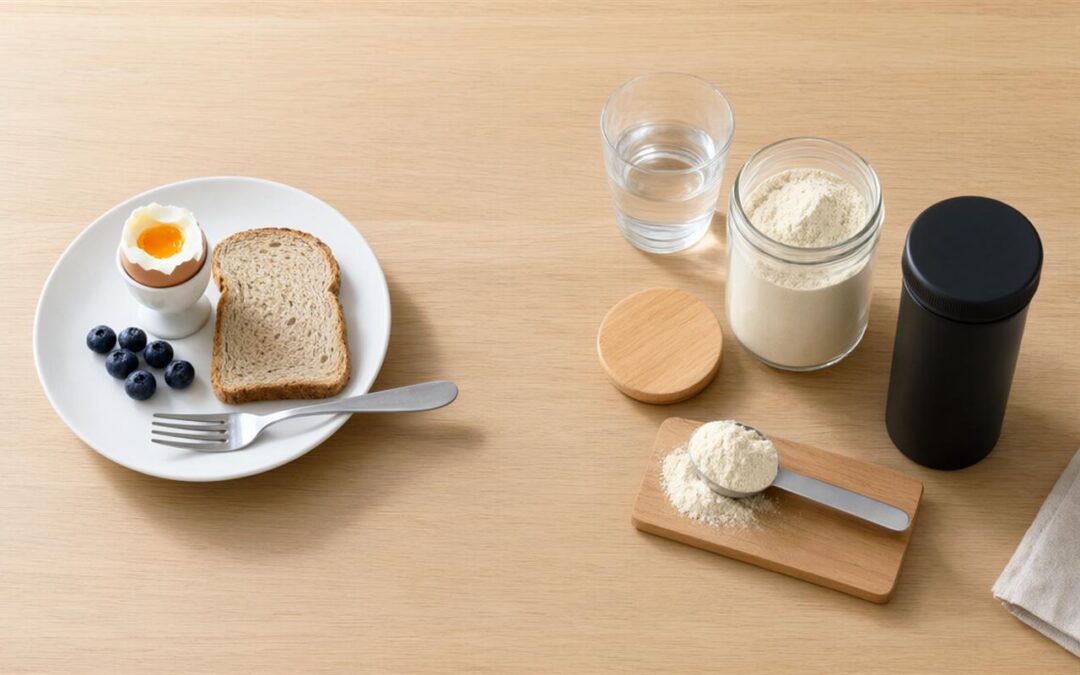
Many people get most of their protein from food without counting anything, and still wonder whether a powder belongs in the cupboard. Adding one is a small decision that the shelf in front of you makes feel much larger: whey, casein, plant blends, bars, drinks, each with a different claim on the label. What follows sorts the category into plain terms, shows where a single serving fits an ordinary day, and explains how to read the numbers on the back of the tub. The Herb Works Inc., a natural wellness store serving Lindon and Mapleton, Utah, and clients nationwide, works through the same questions in its consultations.
What Is a Protein Supplement, Exactly?
If you have wondered what is a protein supplement and whether it belongs in an ordinary week, the useful answer starts with the word supplement. A protein supplement is a concentrated source of protein sold as a powder, a ready-to-drink shake, or a bar, and it is meant to be added to what you already eat rather than to stand in for a meal. The plain way to think about it is as a top-up: it closes a gap on a day when food came up short, without a full round of cooking behind it.
It is just as worth being clear about what a protein supplement is not. It is not a meal, not a medicine, and not a shortcut around the rest of your diet; it sits alongside food and the habits around it. Whether the reason is steadier energy through a long afternoon, support for muscle function, or simply a more consistent intake across the week, the question to ask is how one serving complements what your meals already provide.
The Forms You Will See Most Often
Four forms cover most of what you will see on a shelf, and the differences between them are practical rather than dramatic. Whey, which comes from milk, is the most common: it mixes easily and digests relatively quickly. Casein, also from milk, digests more slowly, which is why it turns up in evening products. Plant-based options draw on pea, rice, soy, and hemp, and single plants are often combined because each one is lower in at least one essential amino acid. Blends do that pairing on purpose, so a single tub can carry both a fast and a slow source.
No single form is right for everyone, and the deciding factors are usually unglamorous ones: whether dairy sits well with you, how you take it (a shaker, a blender, a bowl of oats), and what the rest of the label says. A form that suits your mornings is worth more than one that reads well in a description.
- Whey: Milk-based, mixes easily, and supplies all of the essential amino acids.
- Casein: Milk-based, slower to digest, common in evening products.
- Plant-based: Pea, rice, soy, or hemp, often combined so the amino acid profile is complete.
- Blends: Two or more sources in one product.
Protein Powder for Everyday Use, Not Just Training Days
The case for protein powder for everyday use is less about performance and more about what happens on the days meals come together quickly, or not at all. A serving carried in a bag covers a missed lunch and the hour before dinner when the fridge has nothing ready, and it travels better than a meal does. None of that is dramatic. It is the ordinary maintenance work that keeps intake from sliding on the days that go sideways.
Training is where the category gets most of its attention, though recovery after hard sessions is a separate subject with its own details. The winter version of that subject, with colder air and stiffer warm-ups, is where cold-weather workout recovery guidance picks up. The everyday case is quieter: a serving that keeps intake steady on an ordinary Tuesday does its job whether or not you trained that day.
Where Protein Fits in a Daily Routine
Placement matters more than precision when you are working out where a protein serving belongs. Start with the meals and snacks that already happen, and see whether adding one there is realistic. One product at a time is easier to judge than a full overhaul, and the useful record is simple: the days it was easy to repeat and the days it was not. That pattern says more about fit than any single week of effort.
Matching a product to a goal, rather than to a shelf, is where most routines hold or fall apart. Protein is rarely the only thing in a plan, and the logic that places it also places everything else you take. building a supplement routine around a goal sets out that order for energy, sleep, and digestion, and it is a cleaner starting point than adding products one purchase at a time.
How to Read a Protein Label
A protein label rewards a specific kind of reading, and it starts with a distinction that is easy to miss: the serving size is not always one scoop. Plenty of products list a serving as two scoops, and the protein figure applies to the serving, not to the scoop. Read those two lines together before comparing anything. Then look at grams of protein per serving, the number that lets you put two products side by side on equal terms.
From there, three lines are worth a minute each. Servings per container tells you what the tub really holds once the serving size makes sense. The ingredient list is ordered by weight, so where protein sits in it tells you whether protein is the main component or a supporting one, and added sugars and sweeteners show up there too. A complete amino acid profile is the last check, and on plant products it is usually the reason two sources were blended.
The rest of the panel matters as much as the protein figure: the inactive ingredients, and whether a third party has verified what the label says. Reading a supplement label in full covers those fields, including what a certification mark does and does not tell you.
Common Mistakes Worth Avoiding
Using protein powder as a meal replacement is a common mistake. It is built to supplement, not substitute, and it does not carry what a plate of food does. Stacking two products without comparing their protein content is the next one, and it usually produces either a muddled intake or an unnecessary purchase.
Buying on flavor alone is misleading in a quieter way. Taste matters, because a product you dread is a product you stop using, but it is not the only line on the page. Assuming more protein is always better ignores the fact that needs vary with body size, activity level, age, and diet. The last mistake is the most common: ignoring what food already supplies before adding anything new.
When Protein Deserves a Second Look
Protein may deserve a second look during a stretch of higher training volume, in older age, or while following a restricted diet. A season of poor appetite or a schedule that skips meals belongs on the same list. None of these is a sign of a problem; each one just means the usual intake has shifted.
What those situations share is that a single day tells you very little about them. The week is the better unit to review, because a routine that only works on quiet days is not really a routine. If the answer is not obvious from that look, it is a fair question to bring to someone who works through it with you.
Where a Protein Supplements Guide Stops and a Consultation Starts
A protein supplements guide can explain forms and labels, but it cannot tell you what your own week needs. That gap is where a consultation earns its place. The Herb Works Inc. offers a free first consultation, which opens with a personal health assessment: what you already eat, what you already take, and what you are trying to change.
From there the conversation moves to customized recommendations and then to ongoing support, which monitors progress and adjusts the wellness plan as needed. A personalized wellness plan includes recommended products and lifestyle adjustments, so the answer is rarely a single tub. Appointments run Monday through Saturday, by appointment only. Scheduling a free consultation is the way to start, and the first conversation asks only that you describe what a normal week looks like.
Key Takeaways
- Protein supplements are concentrated sources of protein meant to be added to your daily intake, not replace meals.
- They come in various forms, including whey, casein, plant-based, and blends, each with different characteristics.
- Protein powder for everyday use can keep intake steady when meals are quick or skipped, and it is not only for training days.
- Reading a protein label means comparing grams per serving, checking the serving size against the scoop, and looking at what else is in the tub.
- A consultation can help you review your goals, match products to your needs, and adjust your wellness plan over time.
Conclusion
The Herb Works Inc. has worked as a Nature’s Sunshine consultant since 1975, and the store describes more than 50 years of herbal expertise. Its category list runs from supplements and herbal remedies to essential oils, with a protein section labeled Protein Power. The store’s protein and supplement range is where those categories sit side by side, which makes it easier to compare a powder against the rest of what you already take.
If the cupboard question is still open, the practical next step is a conversation about your goals, your current products, and the week you actually have. That is what a free consultation is for, and it is a low-pressure way to settle whether a protein supplement earns a place in your routine at all.